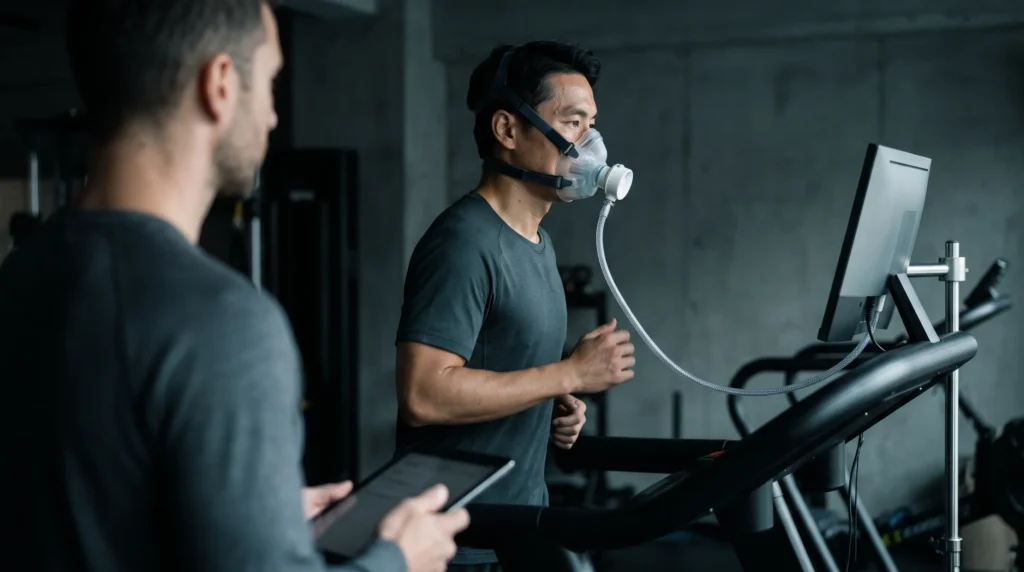
“Longevity” has become one of those words that gets used so often it’s stopped meaning anything specific — a supplement brand, a clinic, a podcast guest’s entire personality. Strip away the marketing and there’s a genuinely useful concept underneath. Here’s what it actually refers to, and why longevity in Bangkok is landing differently with the city’s professional class than the wellness-industry version you’ve probably scrolled past.
Somewhere in the last few years, “longevity” quietly split into two different things wearing the same word. One is a supplement aisle’s worth of marketing — powders and protocols promising you’ll live to 120, usually sold with a picture of someone doing yoga on a beach. The other is a legitimate, measurable shift in how medicine and performance science think about aging: not “how long can you live,” but “how long can you keep functioning the way you want to.”
That second definition is the one worth understanding, because it’s the one that actually changes how you’d approach your own health — and it’s the one increasingly showing up in serious clinical settings, including a small but growing number in Bangkok.

Healthspan vs. lifespan — the distinction that actually matters
Lifespan is simple: the number of years you’re alive. It’s the metric medicine has optimized for the last century, and it’s worked — global life expectancy has risen dramatically. But lifespan alone says nothing about the quality of those extra years.
Healthspan is the number of years you spend functioning well — moving without pain, thinking clearly, maintaining independence, doing the things that make life worth extending in the first place. A longer lifespan with a decade of decline at the end isn’t what most people actually want when they say they want to “live longer.” They want the years, but they want to be good years.
This is the actual core of the longevity movement, underneath the marketing noise: the goal isn’t just adding years to your life, it’s adding life to your years. Once you frame it that way, a lot of the trend makes more sense — it’s not about chasing immortality, it’s about compressing decline into a much shorter window at the very end, rather than spreading it across decades.
Biological age: the idea behind the buzzword
You’ve probably seen the claim “your biological age is younger than your actual age” attached to some test or another. The underlying idea is legitimate, even if the marketing around it often oversells the certainty.
The concept: chronological age (how many years since you were born) and biological age (how your body is actually functioning, physiologically) aren’t the same number for everyone. Two 45-year-olds can have meaningfully different cardiovascular health, metabolic function, and cellular aging markers — one might be functioning, physiologically, more like a 35-year-old, the other more like a 55-year-old. Various testing methods attempt to estimate this — some look at blood biomarkers, others at DNA methylation patterns, others at physical performance measures like grip strength or cardiorespiratory fitness.
The important nuance: biological age estimates are informative, not diagnostic. They’re useful as a general signal and as something to track over time — is the number trending better or worse as you change your habits — rather than as a precise, fixed verdict on your body. Be skeptical of any framing that treats a single test result as a definitive number rather than one data point in an ongoing picture.
Why longevity in Bangkok is landing specifically with the city’s professional class
Longevity as a concept resonates disproportionately with a particular kind of person: someone who’s spent 15–20 years optimizing their career, has the income to actually act on health data, and has started noticing that raw willpower and youth aren’t covering for poor sleep and chronic stress the way they used to. That describes a large slice of Bangkok’s expat and local professional population — executives, founders, regional managers — which is part of why the city has seen a real (if still small) rise in clinics built around this exact framing rather than general wellness.
There’s also a practical, Bangkok-specific angle: a demanding career here often comes with real physiological costs — heat stress, disrupted sleep from odd-hour calls with other time zones, and the general wear of a fast-moving expat or executive lifestyle. “Longevity thinking” — treating your own physiology as something worth measuring and managing deliberately — is less an indulgence and more a practical response to a genuinely demanding way of living.
“Nobody optimizes their quarterly numbers with vibes. It was only a matter of time before the same people started asking for the same rigor about their own bodies.”
What “longevity medicine” actually involves, at a high level
Without getting into specific clinical protocols — that’s a decision between you and a physician, not something to self-direct from an article — the general shape of legitimate longevity-focused care tends to include a few consistent elements:
- Comprehensive baseline testing — bloodwork and biomarkers well beyond a standard annual physical, establishing where you actually stand across multiple systems (cardiovascular, metabolic, hormonal, and others).
- Physician-led interpretation — a real clinician contextualizing what the numbers mean for you, not a generic report.
- A plan that spans more than medicine — movement, sleep, nutrition, and stress are treated as part of the same system as anything more clinical, not as an afterthought.
- Re-measurement over time — the point isn’t a single test, it’s tracking whether the numbers move in the right direction as habits and any interventions change.
That last point is arguably the most important distinguishing factor between a legitimate approach and a marketing-driven one: legitimate longevity care measures outcomes and adjusts. Marketing-driven “anti-aging” sells you a product and moves on.
How to think about it for yourself, practically
You don’t need a clinic membership to apply the underlying logic. Most of what actually moves the needle on healthspan is unglamorous and already familiar: sleep quality, resistance training, cardiovascular fitness, managing chronic stress, and eating in a way that supports stable metabolic health. The clinical/diagnostic side of longevity medicine is most valuable for people who’ve already got those fundamentals reasonably in order and want precision on what to focus on next — not a replacement for them.
A reasonable way to approach it: get the fundamentals right first, and treat testing and more advanced protocols as a way to fine-tune and monitor progress, not a shortcut around the basics.
The short version
“Longevity” is a legitimate shift in how health is being thought about — prioritizing years of good function over just years alive — buried under a lot of marketing noise that oversells certainty and shortcuts. The core ideas (healthspan over lifespan, biological age as a trackable signal rather than a verdict, measurement over guesswork) are genuinely useful. The specific interventions are a conversation for a qualified physician, not a supplement aisle.
If you’re curious what a clinically-run version of this actually looks like in Bangkok, VERO Health runs a physician-led diagnostics-and-protocol model built specifically around this healthspan framing — worth a look if you want to see the concept applied properly rather than just explained.