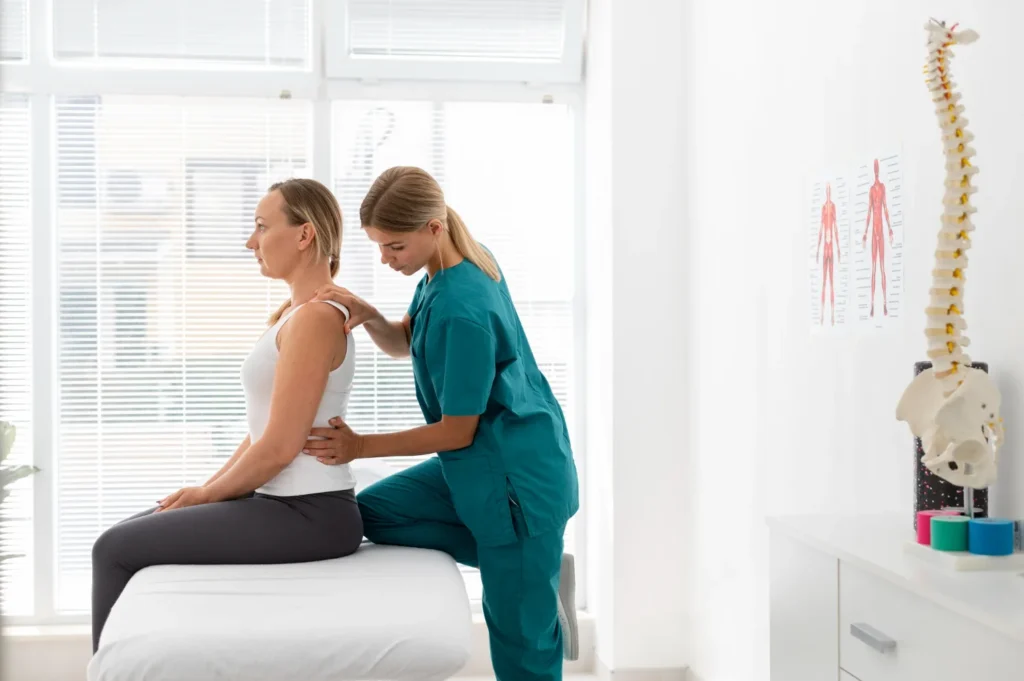
Office syndrome, a tweaked shoulder from Muay Thai, a knee that’s never quite felt right since a running injury two years ago — Bangkok’s physiotherapy scene has grown fast enough to treat almost anything. The confusion isn’t whether help exists. It’s knowing which kind of help you actually need, and what it should reasonably cost.
There’s a specific kind of Bangkok pain that everyone here eventually recognizes: the tight upper back and stiff neck that comes from a desk job, a long commute, and a mattress that seemed fine in the showroom. Locally it’s often called “office syndrome,” and it’s probably the single most common reason residents book their first physiotherapy session in this city. But it’s far from the only one — sports injuries, post-surgical rehab, and old aches that never fully resolved all bring people through the same door.
What often stalls people isn’t finding a clinic — Bangkok has plenty — it’s knowing whether physiotherapy is even the right move, what a fair price looks like, and how to avoid paying premium rates for treatment that never gets past symptom management.

What physiotherapy in Bangkok actually treats
The scope is wider than most people assume before their first visit. In practice, physiotherapists here regularly handle:
- Postural and desk-related pain — the office syndrome cluster: neck tension, shoulder tightness, lower back pain from prolonged sitting.
- Sports and training injuries — strains, sprains, and overuse injuries from running, Muay Thai, weight training, and recreational sport.
- Post-surgical rehabilitation — recovery programs following orthopedic procedures, often coordinated with a surgeon.
- Chronic pain that hasn’t resolved — cases where medication or rest alone haven’t fixed the underlying issue.
- Movement and mobility limitations — restricted range of motion that affects daily function, not just athletic performance.
The common thread across all of these is that physiotherapy addresses movement and mechanical function — not illness in the medical sense. That distinction matters for the next question almost everyone asks.
Physio or doctor first? A practical way to decide
There’s no universal rule, but a few signals reliably point one way or the other:
See a physiotherapist first if: the pain is mechanical (worse with certain movements or postures, better with rest or stretching), there’s no fever, swelling, or numbness involved, and it’s been building gradually rather than appearing suddenly with acute trauma. Most office syndrome, mild sports strains, and general stiffness fall here.
See a doctor first if: there’s been a specific traumatic injury (a fall, a collision, a sharp pop during activity), you’re experiencing numbness, tingling, or weakness that spreads, or the pain is accompanied by symptoms unrelated to movement — fever, unexplained weight loss, or anything that feels systemic rather than mechanical. A doctor can rule out anything requiring imaging or medical intervention before physiotherapy becomes appropriate.
Worth knowing: you don’t need a doctor’s referral to book physiotherapy directly in Thailand. Most clinics accept walk-in or online bookings without one, which is different from how the system works in many home countries and occasionally surprises new expats.
“The question people should be asking isn’t ‘physio or doctor’ — it’s ‘mechanical or medical.’ Get that right and the rest of the decision mostly makes itself.”
What it actually costs
Bangkok’s physiotherapy pricing splits fairly cleanly into three tiers, and — like personal training — the price alone doesn’t tell you about quality. It tells you about the type of clinic and what’s included.
Standard local clinics — roughly 700–1,500 baht per session. Smaller, Thai-run clinics, often without English-speaking staff as standard, focused on straightforward manual therapy and modalities like ultrasound or electrical stimulation. Good value if language isn’t a barrier for you and your case is straightforward.
Mid-range clinics — roughly 1,500–2,500 baht per session. This is where most of Bangkok’s expat-oriented and boutique physiotherapy clinics sit. Multilingual therapists, a broader treatment toolkit (trigger point therapy, dry needling, sports-specific rehab), and typically a proper initial assessment built into the first visit.
Premium/specialist clinics — roughly 2,500–4,000+ baht per session. Clinics combining physiotherapy with sports performance, strength coaching, or executive-level care, often with therapists who are dual-qualified (physio and personal trainer, for instance), plus a more comprehensive facility.
A near-universal pattern worth knowing: the first session usually costs slightly more than subsequent ones — often somewhere around 2,000–2,100 baht even at clinics whose regular sessions run cheaper — because it includes a full assessment, not just treatment. That’s a legitimate cost, not an upsell; a real assessment takes real time.
Package pricing is common and worth considering once you know you’re committing to a course of treatment rather than a single visit — most clinics offer meaningful discounts on blocks of 6–12+ sessions.
The insurance question
Most international health insurance plans that cover physiotherapy in Bangkok do so without requiring a referral, and a number of clinics offer direct billing — meaning you’re not paying out of pocket and claiming later. If you have insurance, it’s worth confirming two things before booking: whether the clinic bills your insurer directly, and whether your policy caps the number of sessions or the amount per session, since that can shape which tier of clinic makes the most financial sense for a longer course of treatment.
What a proper first session should include
A first physiotherapy visit that’s actually doing its job typically includes a real assessment before any hands-on treatment begins — postural evaluation, movement screening, and a conversation about how and when the pain shows up, not just where. You should leave the first session with some understanding of why the problem exists, not only a treatment plan for reducing the symptom.
That distinction is the clearest signal of clinic quality in this market. Treatment that only ever addresses the symptom in front of you — heat, ultrasound, a quick stretch, repeat next week — tends to produce short-term relief that keeps coming back. Treatment that identifies the underlying mechanical cause (a muscle imbalance, a postural habit, a movement pattern) is more likely to actually resolve the issue rather than manage it indefinitely.
Questions worth asking before committing to a course of treatment
- What’s causing this, specifically — not just what’s hurting? A therapist who can answer this clearly is thinking past the current session.
- What does a full course of treatment look like, and how will we know it’s working? Vague answers here are a mild red flag.
- Are you also trained in strength or movement coaching? Dual-qualified therapists (physio + personal trainer) are increasingly common in Bangkok and tend to bridge the gap between “fixed” and “actually strong again” more effectively than physiotherapy alone.
The short version
Most physiotherapy needs in Bangkok are mechanical, not medical, which means you usually don’t need a doctor’s referral or a hospital visit to get started. Expect to pay somewhere between 700 and 4,000+ baht per session depending on clinic tier, expect the first visit to cost slightly more for the assessment, and judge quality by whether the treatment plan addresses the cause of your pain — not just the symptom sitting in front of the therapist that day.
If pain has been part of your routine long enough that you’ve stopped noticing it, that’s usually the sign it’s worth a proper assessment — not something to keep managing on your own.
Physio Bangkok is one clinic in the city built specifically around that root-cause approach, with therapists who are also certified personal trainers and full support for insurance claims — worth a look if you’d rather skip straight to a clinic that already thinks this way.