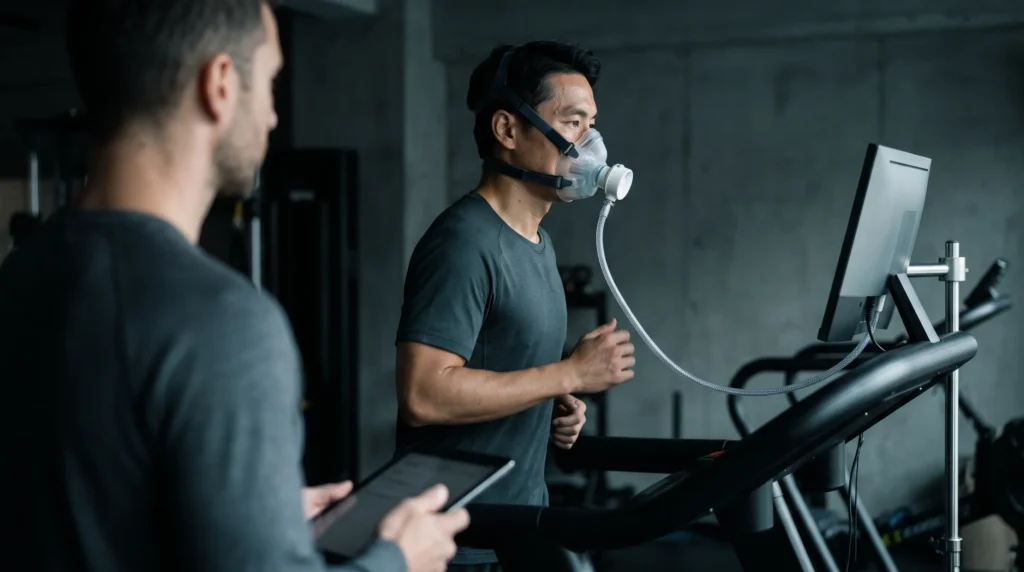
“Biohacking” covers an enormous range — everything from getting morning sunlight and sleeping on a schedule, to unregulated injections sold with a lifespan-extension promise and no real evidence behind them. Bangkok now has a small but growing scene built around the word. Here’s how to tell which end of that spectrum you’re actually looking at.
The term has drifted a long way from its origins. What started, roughly two decades ago, as a DIY self-experimentation subculture — tracking your own biology, trying interventions, measuring what actually changed — has since split into two very different things that both still get called “biohacking.” One is genuinely useful: applying real data and consistent measurement to fairly ordinary health fundamentals. The other is a marketing category, borrowing the same language to sell expensive, unproven, or outright unregulated interventions to people willing to pay for a shortcut.
Both exist in Bangkok now. Telling them apart is the actual skill worth having before you spend money on either.

The legit end of the spectrum
A meaningful and growing body of research backs a specific, fairly unglamorous cluster of interventions — the ones that show up consistently across serious studies rather than just testimonials:
- Sleep optimization — genuinely one of the highest-leverage things in this entire category, and the one most people skip in favor of something more exciting. (We cover Bangkok’s specific sleep challenges in more depth in our Sleep Optimization coverage.)
- Cold exposure — cold showers, cold plunges, and similar practices have real, if modest, evidence behind them for markers like inflammation and mood, without needing to be treated as miraculous.
- Structured light exposure — morning sunlight and light management have a legitimate, well-established role in circadian regulation, which cascades into sleep, energy, and mood.
- Consistent tracking of basic metrics — heart rate variability, sleep data, and similar wearable-driven metrics, used to actually adjust behavior rather than just collected and admired.
- Intermittent fasting and structured eating windows — genuinely researched, with real metabolic effects for many people, though far from universally necessary or beneficial for everyone. (More on this in our upcoming fasting coverage.)
What connects all of these: they’re measurable, studied in real research (not just marketing claims), and low-risk even if the effect turns out smaller than hoped. That’s the actual signature of legitimate biohacking — not that it’s exciting, but that it’s evidence-backed and safe to try.
The marketing end of the spectrum
The same word gets stretched to cover a very different category: unregulated injections and infusions, extreme and prolonged restrictive diets, expensive devices with thin evidence behind bold claims, and interventions borrowed from clinical medicine but sold direct-to-consumer without the oversight that would normally accompany them.
None of this means every advanced intervention is illegitimate — some genuinely clinical, physician-supervised protocols exist and can be appropriate for specific people under real medical guidance. The distinction that actually matters isn’t the intervention itself, it’s whether a qualified physician is genuinely involved in evaluating and monitoring it for you specifically, versus whether it’s being sold as a general-purpose product to anyone willing to pay.
“The best marketing trick in this entire industry is borrowing the language of ‘data-driven’ and ‘evidence-based’ for things that have neither.”
A practical filter, before you spend money on anything labeled “biohacking”
- Is there real research behind this specific claim, or just enthusiasm? A quick check for actual studies (not just testimonials or influencer content) separates a lot of legitimate practices from a lot of expensive noise fast.
- Is a qualified physician actually involved, or is this being sold direct-to-consumer with no medical oversight? This is the single most important question for anything more advanced than lifestyle-level interventions.
- What’s the actual downside if this doesn’t work? Sleep hygiene and cold exposure cost you little if the effect is smaller than hoped. Unregulated injections carry real risk even when the promised upside doesn’t materialize.
- Is the claim proportional to the evidence? Be specifically skeptical of anything promising dramatic lifespan extension — legitimate researchers are consistently more cautious about longevity claims than marketing copy tends to be.
The current trend, and why it’s actually good news
Worth knowing: the biohacking conversation globally has been shifting in a genuinely positive direction — away from extreme, high-cost, high-risk experimentation and toward “smart, sustainable adjustments to sleep, stress, nutrition, and recovery” as the actual center of gravity. That’s a welcome correction, and it maps well onto what a thoughtful approach in Bangkok should look like: get the fundamentals genuinely right before spending on anything more advanced, rather than skipping straight to the expensive, unproven end of the spectrum because it sounds more impressive.
The short version
Biohacking isn’t one thing — it’s a spectrum running from “get better sleep and track your metrics” (genuinely useful, low-risk, well-supported) to “unregulated injections sold with bold promises and thin evidence” (the part worth real skepticism). The word alone tells you nothing about which end you’re looking at; the presence of real research and genuine physician oversight does.
If you want to see what a clinically-grounded version of this actually looks like, VERO Health is Bangkok’s newest biohacking-focused clinic, built specifically around physician-led evaluation rather than direct-to-consumer protocols — a useful reference point for what the legitimate end of this category should actually look like.