Most knee pain in Bangkok is a mechanical problem, not a verdict, and exercise-based physiotherapy is the best-supported first treatment. Here are the common causes, the red flags that need a doctor first, what a good first visit involves, and which clinic extras the research does not back.
Knee pain in Bangkok is not just a runner’s complaint. A nationwide study of older Thai adults found symptomatic knee osteoarthritis in more than half of them, and younger people bring their own versions: sore kneecaps from running laps of the parks, twisted knees from padel or football, and aching joints from years at a desk. The encouraging part is what the research says about treatment. For the most common causes, supervised exercise beats most of what clinic menus add on top.
This guide covers the causes, the warning signs, what knee pain physiotherapy in Bangkok involves, and where scans and injections fit.
Common causes of knee pain in Bangkok
No single diagnosis covers a sore knee, and the location of the pain does not reliably tell you which structure is responsible. These are the causes physiotherapists see most.
Patellofemoral pain, often called runner’s knee. Pain around or behind the kneecap that worsens with squatting, stairs, or sitting for long periods. It is one of the most common causes of knee pain in adolescents and adults under 60, and it usually reflects how the knee is being loaded rather than damage to it.
Knee osteoarthritis. The cartilage and joint change gradually, and pain tends to build with age. In a nationwide Thai sample with an average age of about 69, symptomatic knee osteoarthritis affected 53.8 percent. Older age, female sex, and a higher body mass index were independent risk factors. A population survey in southern Thailand also linked habitual floor activities such as squatting and sitting in the lotus position to a higher risk of painful knee osteoarthritis, which is worth knowing in a country where floor sitting is common.
Meniscal tears. The meniscus is the cushion between the thigh bone and shin. Catching or clicking can point to a tear, and a knee that locks and will not straighten needs medical assessment.
Ligament injuries. A twisting injury followed by a pop, rapid swelling, or a knee that gives way suggests a ligament such as the ACL or MCL. These call for a prompt medical assessment, not a wait-and-see approach.
Tendon problems. Pain just below the kneecap in people who jump or run a lot is often patellar tendinopathy, an overload problem.
Pain from elsewhere. The hip and lower back can refer pain to the knee, in which case the knee itself often examines as normal. A good physiotherapist looks above and below the knee.
The scan shows what is in your knee. It does not tell you what is hurting it.
When to see a physiotherapist, and when to see a doctor first
These are general signposts, not a diagnosis.
Get urgent medical care. A hot, red, swollen knee together with a fever or feeling unwell can signal a joint infection and needs same-day assessment. The same goes for a knee that cannot bear weight, looks deformed, swelled within hours of an injury, or is locked so you cannot straighten it. New calf swelling and pain, especially with chest pain or breathlessness, needs emergency care, because it can mean a blood clot.
See a doctor promptly. Knee pain with unexplained weight loss, pain that wakes you night after night, or numbness or coldness below the knee warrants a medical assessment before exercise-based treatment.
See a physiotherapist. Pain that has not started to ease after a couple of weeks, pain that keeps returning, pain on stairs or squats that limits what you do, or a knee that feels unreliable are the ordinary cases a physiotherapist is trained for. Our back pain guide explains how first-contact access works in Thailand, and the same applies here: private clinics generally let you book directly.
Manage at home first. A mild ache after unaccustomed activity that is easing day by day usually does not need a clinic yet.
Knee pain physiotherapy in Bangkok: what the research says works
The evidence for exercise-based physiotherapy is strongest where knee pain is most common.
Knee osteoarthritis. A 2024 Cochrane review found that land-based exercise probably improves pain, physical function, and quality of life in the short term. Compared with no treatment, usual care, or limited education, pain was about 13 points better on a 0 to 100 scale and function about 12.5 points better, though the authors rate the certainty as low to moderate and caution against overstating the benefit. They note that exercise is recommended as first-line management by every current international guideline for knee osteoarthritis. A separate Cochrane review of 62 trials found that adding extras to exercise, such as electrophysical agents, manual therapies, acupuncture, or dry needling, gave no added improvement in pain, function, or quality of life within six months.
Patellofemoral pain. A 2018 international consensus statement from a panel of 41 experts supports exercise therapy, especially combining hip-focused and knee-focused exercises, along with combined interventions and foot orthoses. Taping is best seen as an adjunct to exercise, not a treatment on its own, and the consensus did not recommend electrophysical agents.
Degenerative meniscal tears. This is where the findings surprise people. In middle-aged and older adults with a degenerative tear, the five-year results of the ESCAPE trial found exercise-based physical therapy non-inferior to arthroscopic partial meniscectomy for knee function, and other long-term trials, including a 10-year follow-up, report similar results. A sham-surgery trial found that the operation was no better than a placebo procedure. A locked knee or a traumatic tear in a younger person is a different situation and belongs with a surgeon.
The common thread is the same as in our back pain guide: progressive exercise is the treatment, and everything else is optional at best. If you want a structured way to build that strength, our strength training guide for beginners explains how to start.
What a first physiotherapy visit looks like
This is a researched description, not a first-person account.
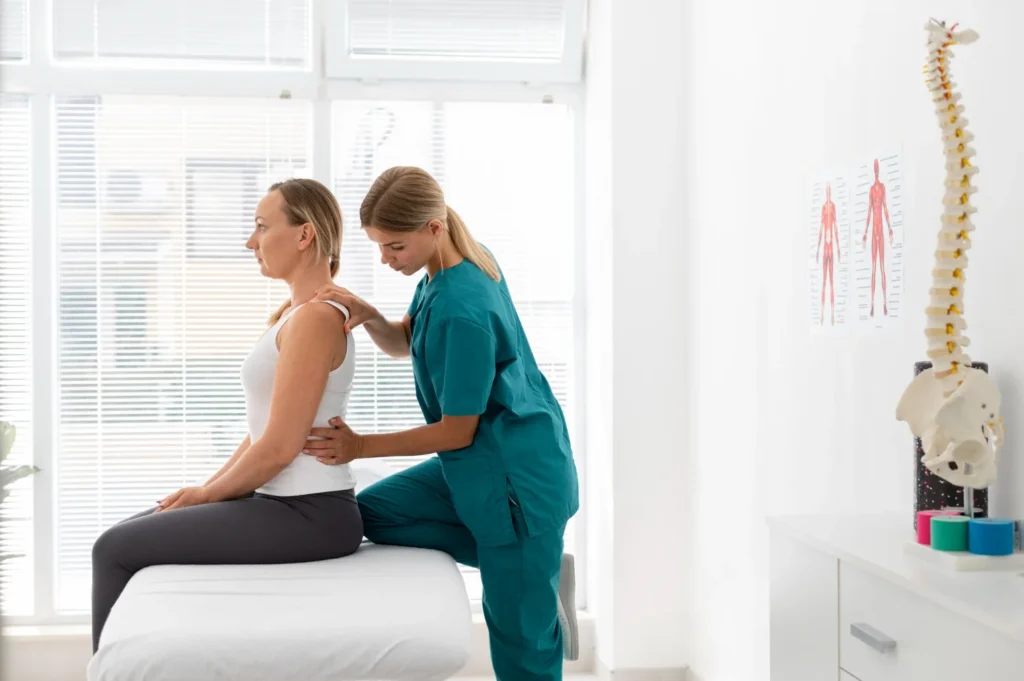
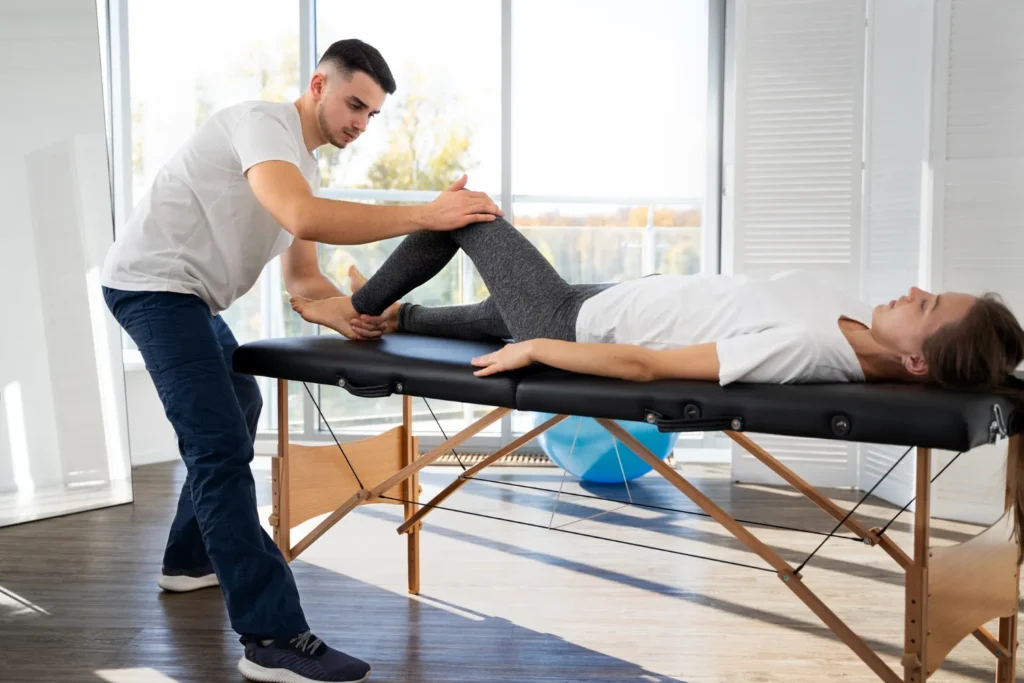
A good assessment begins with questions: when the pain started, what provokes it, what you do for work and sport, how you sit and squat, and what you are worried about. Expect the physiotherapist to watch you walk, squat, and step down, test strength around the hip, knee and ankle, examine the joint, and screen for the red flags above. They should also check the hip and lower back, since pain can be referred.
You should leave with an explanation in plain language, advice on staying active without aggravating the knee, and a progressive strengthening plan, with a sense of how you will know it is working. If a first visit is mostly machines and a few exercises are tacked on at the end, that is the wrong way round.
Scans, injections, and the clinic menu
Be cautious about an MRI as a first step. Imaging finds things in knees that are not painful. A 2008 study in the New England Journal of Medicine found meniscal tears on MRI in anywhere from 19 percent of women aged 50 to 59 to 56 percent of men aged 70 to 90, and most of the tears were in people with no knee pain, aching, or stiffness. A scan report with alarming words can describe ordinary change. Imaging is worth it when there are red flags, after a significant injury, or when a surgeon needs it to decide on a procedure.
Look at the menu critically. Knee pain treatment in Bangkok comes with a long list of options. Some clinic menus feature high-power laser, shockwave, magnetic stimulation, or traction, and a number of clinics market regenerative treatments, which commonly means platelet-rich plasma or stem cell injections. The guideline picture is cool on these for knee osteoarthritis. A 2023 review of clinical practice guidelines found that none recommended platelet-rich plasma injections for hip or knee osteoarthritis, and that stem cell injections were strongly recommended against. That is not a reason to rule them out for everyone, but it is a reason to ask what the evidence is before paying.
Treat these phrases as red flags:
- “Regenerate” or “repair” your cartilage. The research does not show injections repairing joint cartilage.
- “Fix the cause” in a fixed number of sessions. Knee pain often returns, and plans should respond to how you improve.
- A large prepaid package before an assessment. Pay for the assessment first.
- A treatment menu with no exercise in it. The evidence is built on exercise.
What knee pain treatment in Bangkok costs
Physiotherapy sessions in Bangkok run roughly 800 to 4,000 baht depending on the setting, with university and public clinics at the low end and private international hospitals at the high end, as set out in our back pain guide and physiotherapy guide. Our price guide shows how that compares with other fitness costs. Injection-based treatments are priced separately and vary widely, so ask for a written price before agreeing.
How to choose a clinic
The checks are the same as for any physiotherapy: ask whether your therapist is registered with the Physical Therapy Council of Thailand and for the licence number, ask how much of the plan is exercise, and read the marketing with the evidence in mind. If you are returning to impact sport, also ask how the clinic will progress you back, and see our HIIT guide for how to approach high-intensity training sensibly.
The short version
Knee pain in Bangkok usually comes from patellofemoral pain, osteoarthritis, meniscal problems, or overloaded tendons, and the ordinary cases do well with exercise-based physiotherapy. A hot, swollen knee with fever, a knee that cannot bear weight or locks, a deformity, or new calf swelling with chest pain or breathlessness are reasons to go to a doctor or emergency department first. The research supports progressive exercise as first-line treatment for knee osteoarthritis and patellofemoral pain and finds it as good as surgery for most degenerative meniscal tears, while laser, shockwave, traction, and regenerative injections add little or lack support. Scans often show tears in painless knees, so do not treat an MRI report as a diagnosis. Expect to pay roughly 800 to 4,000 baht per session, and ask what the evidence is behind any treatment that promises to regenerate your knee.
This guide will be updated as clinical guidance and Bangkok clinic prices change. If you’re a physiotherapist or doctor and believe a detail here needs correction, contact us.
Sources
- Cochrane Database of Systematic Reviews (2024): Exercise for Osteoarthritis of the Knee
- British Journal of Sports Medicine (2018): 2018 Consensus Statement on Exercise Therapy and Physical Interventions to Treat Patellofemoral Pain
- JAMA Network Open (2022): Effect of Physical Therapy vs Arthroscopic Partial Meniscectomy in People With Degenerative Meniscal Tears, Five-Year Follow-up of the ESCAPE Randomized Clinical Trial
- BMC Public Health (2026): Symptomatic Knee Osteoarthritis in Older Thai Adults, Prevalence, Risk Factors, and Associations With Osteoporosis, Sarcopenia, and Fall Risk