Padel is easy to start, sociable, and cheap per player when four share a court, which explains the boom. It is also an injury-prone sport, mostly through overuse of the elbow, plus ankle sprains and a real risk to the eyes. Here is what it costs in Bangkok, what the research says, and how to start without getting hurt.
Padel in Bangkok has gone from an expat pastime to a glass-walled fixture of the city’s evenings. The sport is often called the world’s fastest-growing, and the numbers are at least consistent with that: one industry dataset counts more than 77,000 courts in over 150 countries by 2026, up about 15 percent in 2025 alone. Published estimates put Bangkok at 15 to 20 clubs and Thailand at fewer than 120 courts, though those figures are a year old and almost certainly out of date.
The appeal is obvious. The risks get less attention. Injuries in padel are common, and the pattern is more specific than “racket sport, expect sore arms.”
What padel is, and why padel in Bangkok is spreading so fast
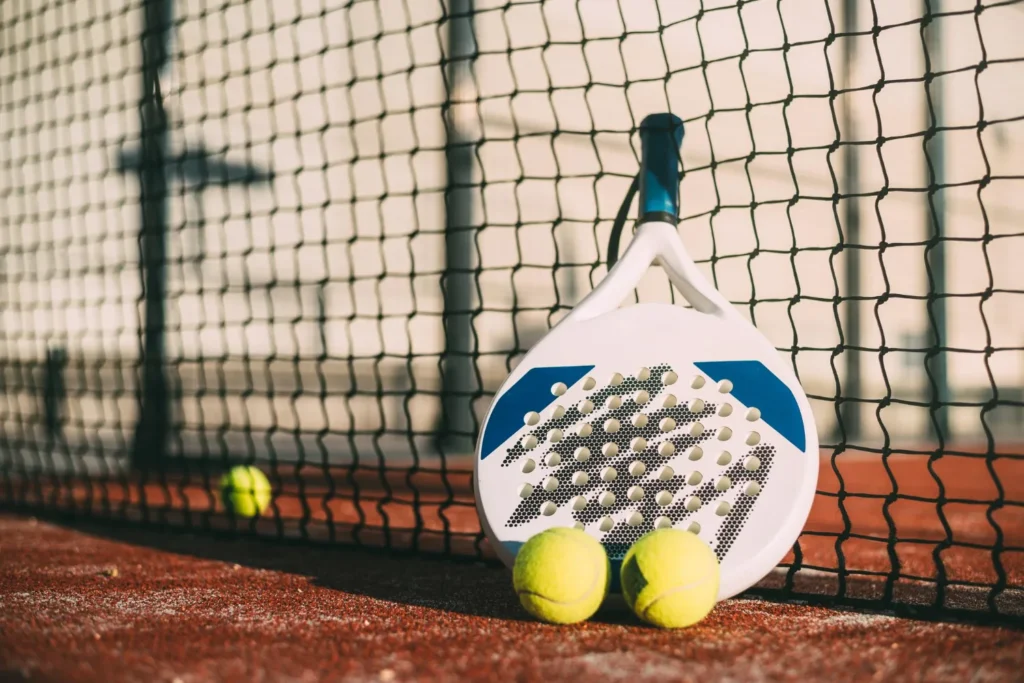
Padel is played in doubles on a smaller court enclosed by glass and mesh walls, with a solid, stringless racket and a ball that stays in play after it bounces off the walls. The scoring follows tennis. Rallies last longer than in tennis because the walls keep the ball alive, which is a large part of why beginners enjoy it quickly.
That social, low-barrier structure is what clubs sell: four people, one court, a game that feels competitive within a couple of sessions. It is exercise that does not feel like exercise, which is its strength and, as the injury data shows, its trap.
Padel courts in Bangkok: what it costs
Court prices are per court, not per player, so four people split the bill. These are examples from club pages and directories, not a ranking, and prices change by hour and by day.
| Club (example) | Court price per hour (THB) | What to know |
|---|---|---|
| No Drama Padel (riverside, covered courts) | 900 off-peak, 1,200 peak | Off-peak is weekday daytime. Lessons from 1,400 an hour |
| Baan Padel (seven courts, advertised as air-conditioned) | 1,500 weekday daytime, 1,800 peak | The club’s own claim about its air-conditioning |
| Kross Padel (several venues) | About 800 outdoor, 1,000 indoor | A guest session at its indoor venue is listed at 250 baht |
| Pad Thai Padel and The Padel Co. | From about 1,400 | The Padel Co. is described as fully indoor |
At 1,200 baht an hour, four players pay 300 baht each, which is why padel is cheap compared with most other sports in this guide. Coaching typically runs about 1,400 to 1,800 baht an hour, and racket rental is usually extra. Our price guide shows how that compares with gyms and classes.
What the research says about padel injuries
The main systematic review, published in 2023 in BMJ Open Sport and Exercise Medicine, pooled eight studies and 2,022 players. It found about 3 injuries per 1,000 hours of padel training and 8 per 1,000 hours of matches, with an overall prevalence ranging from 40 to 95 percent across studies. The elbow was the most common site, followed by the knee, shoulder, and lower back, and tendon and muscle injuries were the most reported types.
A 2025 review comparing racket sports found similar patterns, with padel showing tendon injuries in about 44 to 49 percent of cases and muscle injuries in about 27 to 34 percent, and the elbow involved in 30 to 74 percent. Tennis and squash players more often hurt the ankle and knee. A cross-sectional study of amateur players in Chile, by contrast, found the ankle and foot the most common site, followed by the elbow and shoulder. The sports and samples differ, so treat the ranges as a pattern, not a prediction.
Padel injuries are mostly slow ones: overworked tendons, not dramatic collisions.
The practical picture, by body part:
- Elbow. Tennis elbow, or lateral epicondylitis, is the most common upper-limb problem in padel reviews. It builds with repetition and tends to arrive weeks into a new habit.
- Shoulder. Overhead shots and repeated swings load it, and shoulder injuries are among the commonly reported.
- Ankle and knee. Fast lateral movement and quick changes of direction mean sprains and knee strains, and ankle sprains were a leading injury in some studies.
- Lower back. Repeated twisting and bending put it among the four commonly affected regions.
The evidence has limits. Many studies come from Spain, definitions of injury differ, and the reviews describe the data as limited. What they agree on is the shape: lots of tendon and muscle overuse, and a high proportion of players affected over time.
The risk people overlook: your eyes
Padel is played in a small enclosure, at close range, with a hard ball. A Swedish register study of sport-related eye injuries in one county found padel was the leading cause in its most recent year, and that nearly all padel eye injuries came from the ball, not the racket. A survey of 583 Italian players found that 10.3 percent had suffered at least one padel-related eye injury, 92 percent from the ball. A quarter of those injured described lasting effects on quality of life, and six reported eye surgery.
Despite that, interest in protective eyewear is low: only 9.6 percent of respondents strongly agreed that it was important. Researchers across these studies recommend protective eyewear, and it is the one prevention measure they consistently suggest. If you play regularly, ask an optician about sport-specific eyewear, especially if you already wear glasses.
Heat, haze, and where you play
Bangkok adds its own variables. Outdoor and part-covered courts mean heat and humidity, and the November to March haze season matters for anyone playing outdoors in the evening. The same cautions apply as for any high-intensity activity here: build up gradually in the heat, drink fluids, and treat bad air days as indoor days. Our HIIT guide covers acclimatization and haze in more detail, and fully indoor courts solve both problems, at a higher price.
Padel for beginners in Bangkok: how to start without getting hurt
These are general principles, not an individual plan.
- Take a few lessons early. A coach can fix grip and stroke habits before they become an elbow problem.
- Wear shoes designed for court sports. Padel involves fast lateral movement, so shoes made for court sports are a safer bet than running shoes.
- Ramp up gradually. The injuries are overuse injuries, so going from nothing to several matches a week invites them. Our Hyrox guide describes the same pattern in another trend sport.
- Warm up, and build general strength. Strong legs, shoulders, and core help, and our strength training guide explains how to begin.
- Consider protective eyewear, as above.
If something starts to hurt, deal with it early. Our knee pain guide, back pain guide, and physiotherapy guide explain when to see a physiotherapist, and a hot, swollen joint, a deformity, or any blow to the eye with vision changes needs a doctor. Also check whether your insurance treats recreational racket sports as covered, as our insurance guide explains.
The short version
Padel in Bangkok is a cheap, sociable way to exercise, with court hire from roughly 800 to 1,800 baht an hour split between four players. The sport is also injury-prone: reviews find about 3 injuries per 1,000 training hours and 8 per 1,000 match hours, with the elbow most affected, then the knee, shoulder, and lower back, and mostly tendon and muscle overuse. Eye injuries from the ball are a distinct risk, and eyewear is the one prevention measure researchers consistently suggest. Take a few lessons, wear proper court shoes, ramp up gradually, mind Bangkok’s heat and haze, and see a physiotherapist early if pain builds.
This guide will be updated as Bangkok’s padel scene and the research evolve. If you’re a coach, physiotherapist, or sports physician and believe a detail here needs correction, contact us.
Sources
- BMJ Open Sport and Exercise Medicine (2023): Incidence, Prevalence and Nature of Injuries in Padel, A Systematic Review
- Eye (2026): Ocular Injuries in Padel, Findings From a Survey on Frequency, Risk Factors, and Perceptions Toward Protective Eyewear
- The Padel Blueprint: Padel Market Data 2026, Courts, Countries, and Growth by Region
- No Drama Padel: Padel Prices in Bangkok