Haze is a reason to change where and how hard you train, not whether. Here is Thailand’s own colour scale turned into training decisions, what the research says about exercising in polluted air, whether time of day helps, whether masks work, and why indoors is not automatically clean.
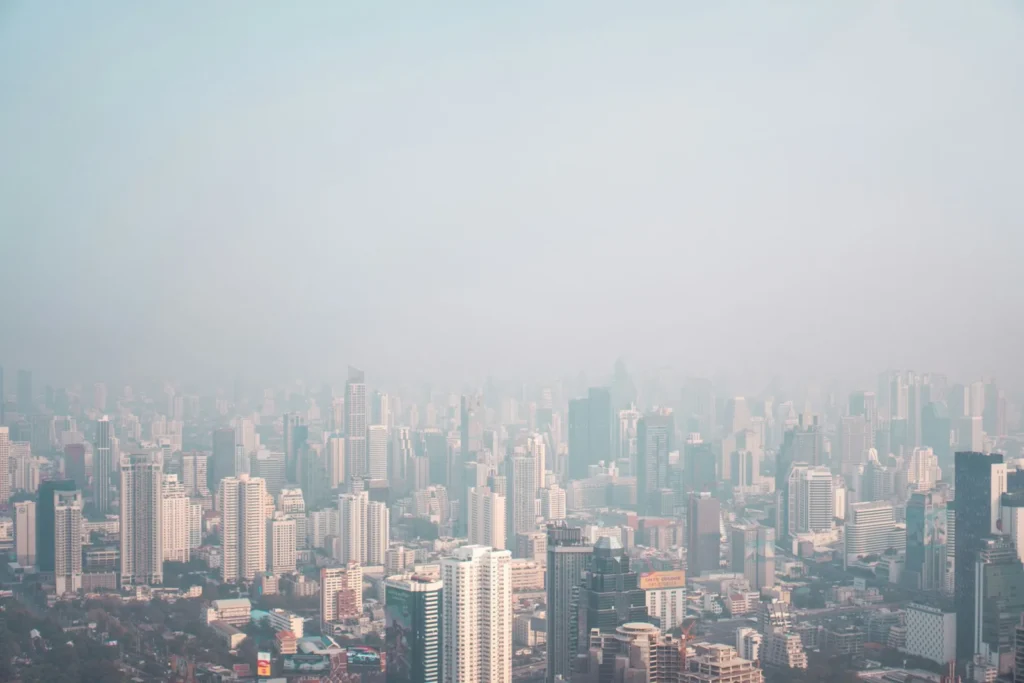
Exercising in Bangkok’s air pollution season is a judgment call that changes by the day, and the calendar alone cannot make it for you. Thailand’s Pollution Control Department treats November to March as the critical PM2.5 period for the Bangkok region, with the worst weeks usually in January and February. On January 14, 2026 the citywide average reached 58.1 micrograms per cubic meter, well above the national daily standard of 37.5, and some central districts topped 80.
Most healthy people should not stop exercising because of that. They should check one number before a session, and let it decide where the session happens and how hard it is.
PM2.5 and exercise in Bangkok: how bad is the air, and when?
PM2.5 means particles smaller than 2.5 micrometers, small enough to reach the lungs and bloodstream. Thailand tightened its daily standard to 37.5 µg/m³ in June 2023, with an annual standard of 15. The World Health Organization’s stricter guideline is 15 for a day and 5 for a year, so on that measure almost every dry-season day is over the line.
Thailand’s Pollution Control Department monitors a national haze season from November 1 to May 15, and Bangkok’s own readings typically peak in January and February. Cooler, still air traps traffic, burning, and industrial emissions near the ground.
One practical trap: AirBKK and Air4Thai report Thailand’s own air quality index, while IQAir defaults to the US scale, so the same afternoon can show very different numbers. The Bangkok Metropolitan Administration itself sticks to raw PM2.5 in µg/m³ to avoid that confusion, and so does this guide.
The Thai colour bands, turned into training decisions
Thailand’s official bands come with official advice. The right-hand column is our reading of what that means for a training session, not an official rule.
| Band | PM2.5 (µg/m³) | Official advice | What it means for training |
|---|---|---|---|
| Blue and green | 0 to 25 | Normal activity | Train outside as usual |
| Yellow | 25.1 to 37.5 | Reduce prolonged strenuous outdoor activity, sensitive groups wear protection | Easy and moderate sessions outdoors are fine. Keep long or very hard sessions for another day or indoors |
| Orange | 37.6 to 75 | Wear PM2.5 protection outdoors and limit strenuous activity, sensitive groups avoid it | Default to indoor training for anything hard. Outdoors only short and easy, with a well-fitted mask if you choose |
| Red | 75.1 and above | Cease outdoor activities | Indoors only |
Sensitive groups means children, older adults, and people with heart or lung conditions such as asthma or COPD. If you are in one of those groups, your doctor’s advice outranks any chart.
Exercising in Bangkok’s air pollution: what the research says
The reassuring part first. A 2016 modeling study in Preventive Medicine estimated all-cause mortality for different mixes of physical activity and pollution. At the global average urban PM2.5 of 22 µg/m³, the benefits of activity far outweighed the harms even at extreme levels of cycling or walking. At 100 µg/m³, harms started to exceed benefits after about an hour and a half of cycling a day, or more than ten hours of walking a day.
The less comfortable part is more recent. A 2025 pooled analysis of seven studies found that regular exercise still cut the risk of death, by about 30 percent for people reaching 2.5 hours of moderate or vigorous activity a week. But the benefit weakened when the long-term annual average PM2.5 was 25 µg/m³ or higher, and weakened further above 35. Bangkok’s annual average has been reported in the low 20s in recent years (about 21 in 2020 and 23 in 2019, using IQAir-based figures), which puts it near that line.
Both findings come with caveats. The first is a model that depends on assumptions, and the second is about years of exposure, not a single session. They answer a different question from “should I run tonight.”
Pollution is a reason to change where and how hard you train. It is not a reason to stop.
The useful takeaway is the behavioral one. Modeling work suggests that restricting activity on polluted days can cost more health than it saves if people do not replace the activity. So when the air is bad, move the session indoors instead of skipping it.
Does time of day help?
Less than the usual advice implies, because the evidence disagrees.
- Monitor data from Bangkok in 2018 found PM2.5 highest around 9 a.m., lowest around 3 p.m., and rising again after 6 p.m.
- A study of two Greater Bangkok haze episodes found PM2.5 relatively high at night and in the morning and lower in the afternoon, once haze set in.
- An independent hourly analysis of 2023 to 2026 model data found the cleanest hours around 4 to 6 a.m. and the worst around 7 p.m. in the dry season. It is not peer reviewed, and it uses modeled, not measured, values.
So for anyone running in Bangkok’s pollution, “run at dawn” is not a safe rule, and neither is “avoid the evening.” Haze episodes vary from day to day with wind and temperature inversions. The only reliable method is to check the hourly reading, and the forecast, for the time you plan to train. Heat is the other half of the timing question, and our HIIT guide covers it.
Masks: what they do, and what they cost you
Thailand’s Pollution Control Department advises certified PM2.5 or N95 masks outdoors from the orange band up. Ordinary surgical masks are not designed to filter PM2.5, as pulmonologists quoted by the Bangkok Post have pointed out. A mask only helps if it fits, and a loose one leaks.
The exercise cost is real but smaller than people fear. A 2022 meta-analysis of 22 studies and 1,573 participants found that surgical and N95 masks did not reduce exercise performance, but did raise perceived exertion and breathlessness, and N95 masks raised heart rate by about 2 beats per minute. A randomized crossover trial found masked participants rated breathing resistance at about 7 out of 10 at peak effort, against zero without a mask, and reached a lower peak VO2.
Those studies were done for pandemic reasons, not haze, and none was done in Bangkok’s heat. The practical reading is that a well-fitted N95 is reasonable for an easy outdoor session on a yellow or orange day, and a poor companion for hard intervals. Hard work belongs indoors.
Indoors is not automatically clean
A 2025 study of 17 Thai homes measured indoor PM2.5 at about 0.76 of the outdoor level during haze episodes in Bangkok. That means closing the windows alone does not make indoor air clean.
That matters for training. An air-conditioned gym is not the same as a filtered gym, and a studio with open doors or fans pulling in outside air is not shielded at all. Open-air gyms, rooftop sessions, and open-sided courts get no protection. When you choose an indoor option for the season, ask whether the air is filtered and whether doors and vents bring outside air in. Our guide to choosing a gym covers what else to check, and our price guide shows what indoor options cost.
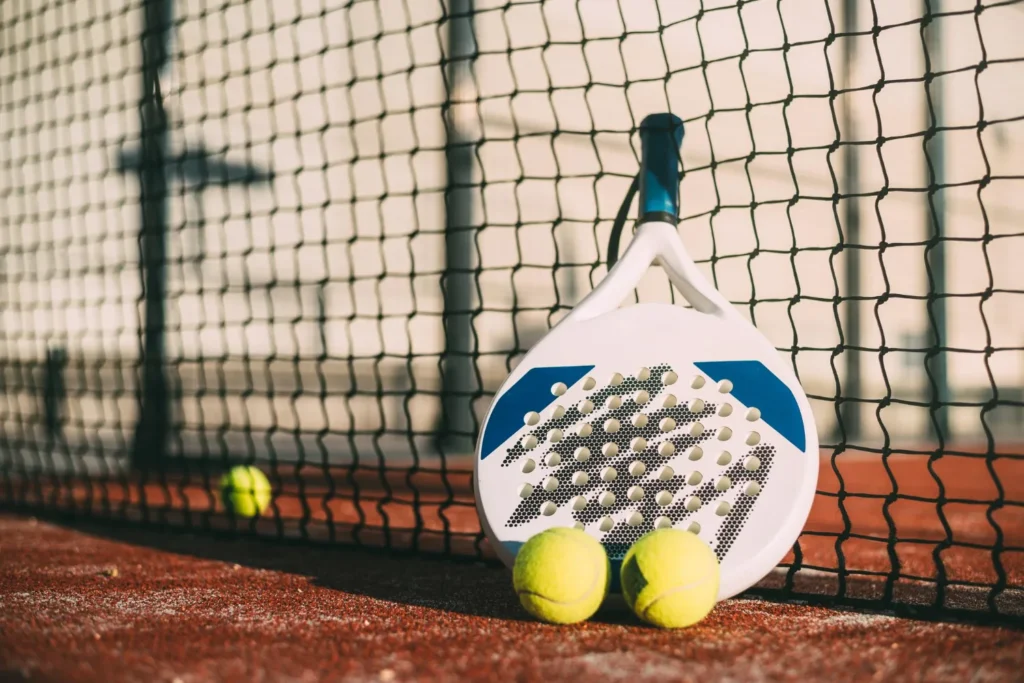
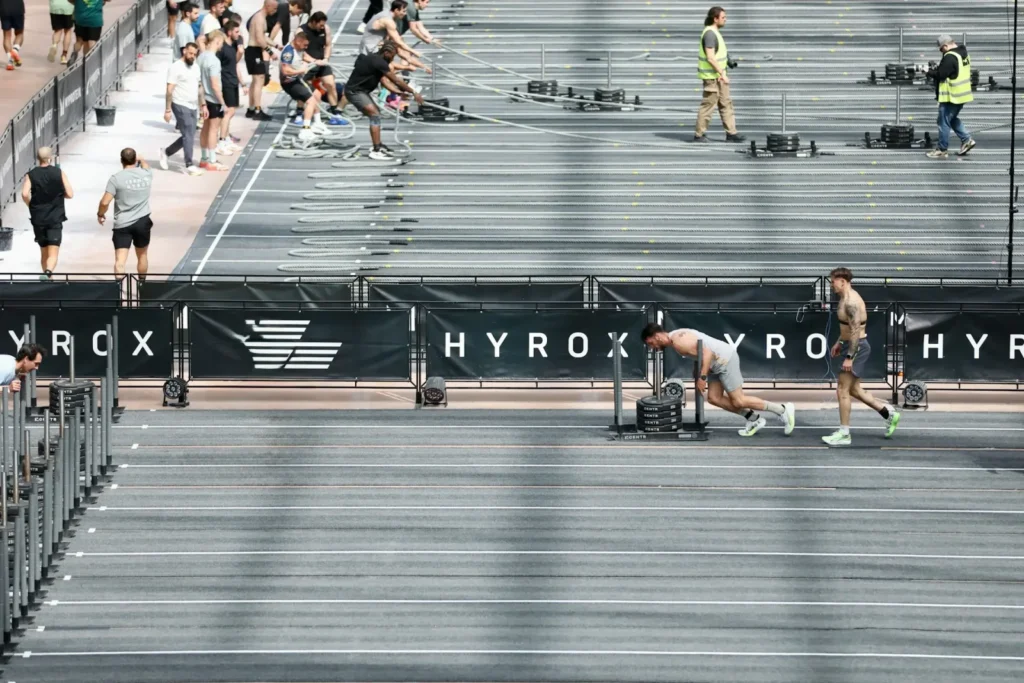
Low-impact indoor work is a good haze-season fallback, and our Pilates guide and strength training guide are two starting points. If you play outdoors, our padel guide covers the sport, and our Hyrox guide covers training for it.
Warning signs, and who should be most careful
Stop and cool down if you notice coughing, wheezing, chest tightness, dizziness, or unusual breathlessness, and take them seriously if you have asthma, heart disease, or are pregnant. Chest pain, severe breathlessness, or fainting needs urgent medical care, and our insurance guide explains the emergency numbers.
A simple routine for Bangkok’s haze season
- Check the live PM2.5 reading on AirBKK or Air4Thai before you leave, for the hour you will train.
- Match the session to the band. Hard work outdoors only in blue, green, or low yellow.
- Move, don’t skip. On orange and red days, swap in an indoor session of similar effort.
- Line up an indoor option before the season peaks. A class or gym you already belong to is easier to use than one you have to find in January.
- Keep a mask that fits for easy outdoor sessions and commuting.
The short version
Exercising in Bangkok’s air pollution season is safe for most healthy people if you let a live reading decide the plan. Train outdoors as usual in the blue and green bands, keep outdoor work easy in yellow, move hard sessions indoors in orange, and stay inside in red, with children, older adults, and people with heart or lung conditions erring toward caution. Research suggests the benefits of exercise outweigh the harms until pollution is very high, but they weaken with years of heavy exposure, so the answer to a bad air day is to move the session indoors, not to skip it. No time of day is reliably cleaner, masks work but make hard efforts feel much harder, and indoor air is not automatically clean, so ask about filtration.
This guide will be updated as Thailand’s air quality guidance and the research change. If you’re a physician, respiratory specialist, or sports scientist and believe a detail here needs correction, contact us.
Sources
- Preventive Medicine (2016): Can Air Pollution Negate the Health Benefits of Cycling and Walking?
- UCL News (2025): Air Pollution May Reduce Health Benefits of Exercise
- Nation Thailand: BMA Proposes Work From Home on Thursday as Bangkok Air Pollution Worsens
- Applied Physiology, Nutrition, and Metabolism (2022): The Impact of Face Masks on Performance and Physiological Outcomes During Exercise, A Systematic Review and Meta-Analysis