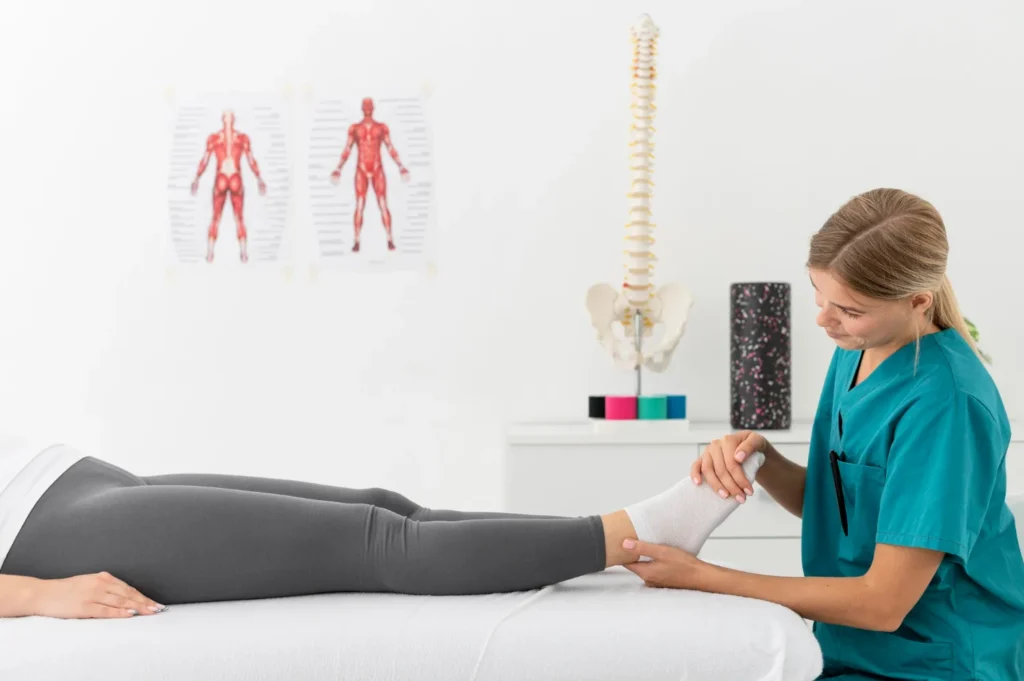
Posture is one factor in desk pain, not the whole story, and the best-supported fix is exercise and movement, not a perfect chair. A late-2026 Cochrane update found ergonomic gear made little difference to pain. Here is what helps the neck, shoulder, and wrist, and what to skip.
Posture correction in Bangkok is sold as the cure for “office syndrome”: braces, alignment assessments, adjustable desks, and packages of sessions to straighten you out. The research is less tidy than the sales pitch. Posture matters, but it is a weaker predictor of pain than most people assume, ergonomic equipment does little for pain on its own, and the treatment with the best support is plain exercise.
This guide covers how common desk pain is in Bangkok, what the research says about posture, what actually helps the neck, shoulder, and wrist, and how to tell when it needs a professional. For mobility routines aimed at desk workers, see our mobility and flexibility guide.

What office syndrome in Bangkok actually is
“Office syndrome” is the Thai shorthand for the aches that come with long hours at a desk, mostly in the neck, shoulders, upper back, and wrists. It is a label for a pattern, not a diagnosis, and the causes behind it vary.
It is common. A cross-sectional study of 545 Thai office workers found that 37.9 percent reported a musculoskeletal complaint in the previous seven days, most often in the neck (27.5 percent), shoulders (22.7 percent), and lower back (17.6 percent). The authors note that earlier studies have reported rates anywhere from 33 to 65 percent. Pain levels were moderate, and mostly did not cause time off work, which fits the experience of most readers: annoying, persistent, and easy to ignore.
Does bad posture cause pain?
Partly, and less than the marketing says. A 2019 systematic review and meta-analysis found that adults with neck pain showed more forward head posture than adults without pain, and that the posture measures correlated with pain intensity and disability in adults and older adults. In adolescents it found no such association, and age was an important confounder.
Other analyses are less convinced. A later meta-analysis found no significant difference in some head and neck posture measures between people with and without neck pain, and researchers describe the relationship as unclear. A key limit sits underneath all of this: most of the studies are cross-sectional, so they show that two things travel together, not that one causes the other. Pain can also change how people hold themselves.
The sensible reading is that posture is one input, along with how long you stay still, how strong and conditioned you are, stress, and sleep, and that forcing yourself into a rigid “good posture” is not a strategy with strong evidence behind it.
A perfect chair will not do what stronger shoulders and regular movement will.
What the research says works
Exercise has the strongest support. A systematic review and meta-analysis of 27 randomized trials of workplace interventions for neck pain in office workers found moderate-quality evidence that neck and shoulder strengthening exercises, and general fitness training, reduced neck pain in office workers who had symptoms, with a larger effect for strengthening. The evidence for ergonomic interventions in the same review was low quality.
Ergonomic equipment disappoints. An updated Cochrane review, published in late October 2026, pooled 20 randomized trials of 2,478 workers with arm, neck, or shoulder complaints. It found that ergonomic interventions, including sit-stand desks, specialized keyboards and mice, workstation redesign, and ergonomic training, made little to no difference to pain, function, recovery, or sick leave compared with no treatment. Ergonomic approaches appeared less effective than exercise, though small benefits were possible in subgroups such as people with rotator cuff tendinitis.
Breaks may help a little. An earlier Cochrane review found very low-quality evidence that supplementary breaks reduce discomfort in the neck, shoulder, and upper limb among data-entry workers, and that sit-stand desks and workstation adjustments had no effect on upper limb pain compared with no intervention. A separate earlier review found that height-adjustable desks reduce sitting time, though their health effects are unclear.
What this adds up to is a change in where to spend money and effort. A sensible workstation is fine, and an expensive one is not a treatment. Time spent on strength and movement is better supported.
The neck, the shoulder, and the wrist
Neck. For ordinary desk-related neck pain in Bangkok, as elsewhere, the evidence favors strengthening and general conditioning, often guided by a physiotherapist at the start. Smartphone and laptop “text neck” gets blamed, but the evidence mirrors forward head posture generally: an association in some studies and no proof of cause. Neck pain with arm weakness, spreading numbness, or fever, or after an injury, needs a doctor first.
Shoulder. Most desk-related shoulder pain is rotator cuff-related shoulder pain, for which exercise therapy is the recommended first-line treatment across guidelines and reviews. There is no evidence that surgery is better than conservative care for most subacromial pain, and a review found that adding manual therapy to exercise was not more effective than exercise alone. An update of systematic reviews also found moderate evidence of no effect for laser therapy, shockwave, pulsed electromagnetic therapy, and ultrasound, which matters because some clinics lead with them.
Wrist. Computer work is not established as a cause of carpal tunnel syndrome. A systematic review of eight epidemiological studies found insufficient evidence that it causes the condition, and measured pressure in the carpal tunnel during typing generally stayed below levels associated with nerve harm. The better-established risk factors are vibration, forceful and repetitive work, age, sex, and obesity, and keyboard and mouse use are better seen as aggravating factors. Night splints and a corticosteroid injection are standard options with short-term benefit. Wrist pain physiotherapy in Bangkok typically starts by checking whether the nerve is involved, and persistent numbness, weakness, dropping things, or wasting of the thumb muscle means a doctor should see you.
Posture correction in Bangkok: the passive options
Bangkok makes passive treatment easy: Thai massage, “office syndrome” clinics, machine-based sessions, and braces. Some of this feels good and has some support, and none of it replaces strength work.
Small Thai trials, often run in traditional medicine clinics, have reported short-term pain reductions and better neck movement after Thai massage and Ruesi Dad Ton, a traditional stretching exercise. They are small, short, and not the same quality as the larger reviews above, but they support massage as a reasonable way to ease symptoms. Our price guide shows what massage costs.
Treat these as red flags:
- Posture braces and “alignment” packages sold as a fix. The evidence behind them is weak.
- A treatment menu built on laser, shockwave, or ultrasound for shoulder or neck pain. The evidence for these is poor.
- “Cure” or “permanent” promises, or a large prepaid package before an assessment.
- A clinic that never gives you exercises to do on your own.
Our guides to choosing a physiotherapist and back pain explain how to judge an assessment, and our red light therapy guide covers one more passive option.
What to do about desk pain
This is general guidance, not an individual plan.
- Break up long sitting. Short, frequent movement breaks have more support than a perfect position.
- Build strength, including the upper back and shoulders. Our strength training guide for beginners is a place to start.
- Set up your workstation sensibly, but do not expect equipment to solve the problem.
- Mind stress and sleep, which affect pain. Our stress guide and sleep guide cover the basics.
- Ask your employer what support exists. Our corporate wellness guide explains what works at work and what does not.
When to see a physiotherapist or a doctor
See a physiotherapist if pain has not started to ease after a few weeks, keeps coming back, or limits your work or sleep. Our physiotherapy guide and guide to common expat injuries cover what to expect and what it costs.
See a doctor first if you have weakness in an arm or hand, numbness that spreads or does not go away, neck pain after a fall or accident, neck pain with fever or a severe headache, or any new weakness or loss of coordination. Chest pain or shortness of breath with arm or neck pain needs emergency care, and our insurance guide explains the numbers to call and how claims work.
The short version
Posture correction in Bangkok is a crowded market, but the research is sober: forward head posture is associated with neck pain in adults without proving cause, and a Cochrane update from late October 2026 found that sit-stand desks, special keyboards, and workstation redesign made little to no difference to neck and arm pain. Strengthening exercise and general fitness training have moderate-quality support for office workers with neck pain, exercise is first-line for rotator cuff-related shoulder pain, and computer work is not established as a cause of carpal tunnel syndrome. Skip posture braces, laser, shockwave, and prepaid “alignment” packages, since posture correction in Bangkok is mostly a product category, treat massage as relief rather than a cure, and see a physiotherapist for pain that persists, or a doctor first for weakness, spreading numbness, or neck pain with fever or after an injury.
This guide will be updated as workplace pain research and Bangkok clinics change. If you’re a physiotherapist or doctor and believe a detail here needs correction, contact us.
Sources
- Cochrane (2026): Little Evidence That Common Workplace Ergonomics Help With Pain
- Physical Therapy (2018): Workplace-Based Interventions for Neck Pain in Office Workers, Systematic Review and Meta-Analysis
- BMC Musculoskeletal Disorders (2008): Carpal Tunnel Syndrome and the Use of Computer Mouse and Keyboard, A Systematic Review
- Factors Associated With Reduced Risk of Musculoskeletal Disorders Among Office Workers, A Cross-Sectional Study 2017 to 2020